How We Test

A hypothesis worth testing must be able to lose.

Make the questions provocative. Keep the conclusions scientifically sober.

Every investigation separates observations, interpretation, uncertainty, and the evidence that could change the result.

Public guide · complete technical rules remain in the Scientific Audit

Interactive-analysis bridge

Define → Predict → Test → Assess → Revise

Each step changes the scientific task. None may be skipped simply because an explanation feels plausible.

  1. Define

    What exactly is being tested?

    Freeze the question, boundary, pathway, and scope before scoring.

  2. Predict

    What should differ between models?

    State risky, distinguishing expectations before seeing the result.

  3. Test

    What do the observations show?

    Use source-linked evidence and test credible alternative explanations.

  4. Assess

    What conclusion does the evidence permit?

    Report strength, uncertainty, limitations, and the correct decision state.

  5. Revise

    What would change the conclusion?

    Keep failed hypotheses, corrections, and version history visible.

Look closer

Four clues. Different jobs.

Choose an evidence class. Separate the observation from the inference—and keep its limit attached.

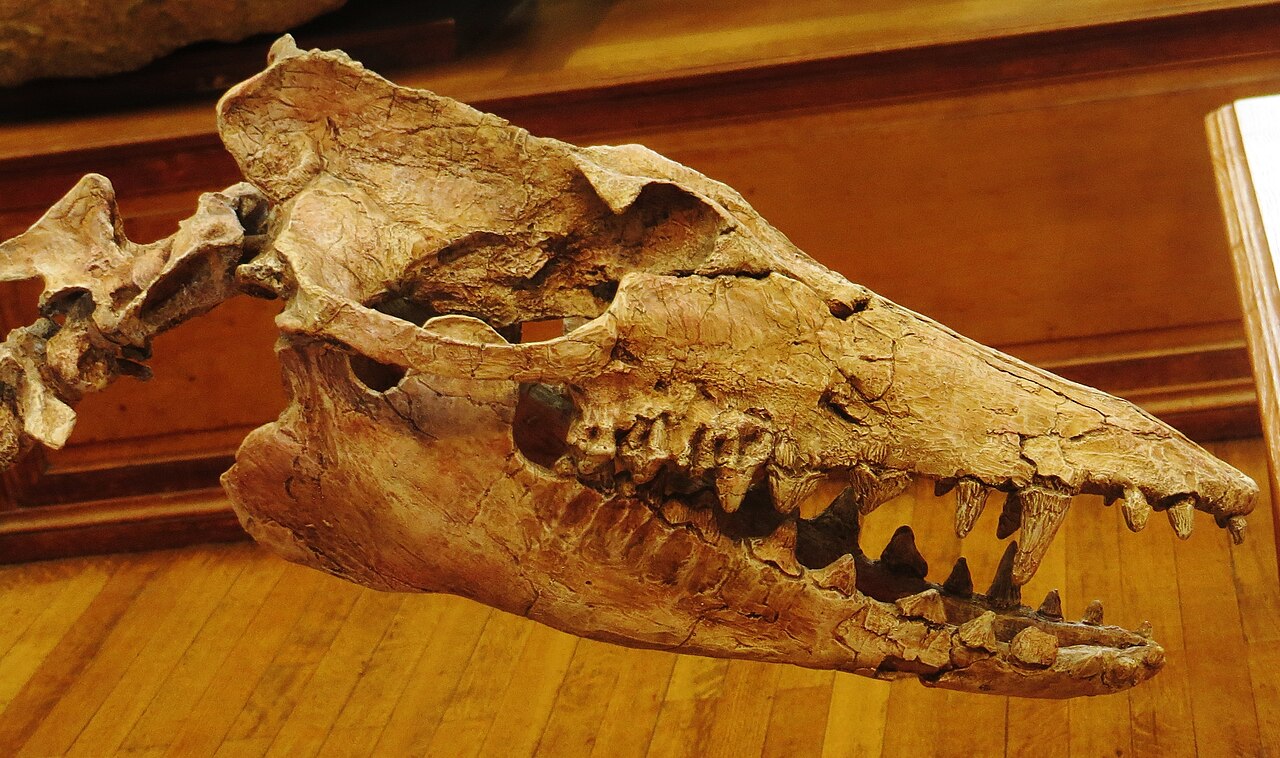
Museum-displayed Pakicetus skull viewed from the sideAuthentic specimen photograph
W-F02 · Layer: Both

Fossils

What was observed?
Early-whale groups form an ordered, overlapping, branching record of anatomical and ecological change.
Why does it matter?
Improved sampling tests whether a proposed ancestry boundary remains stable.
What does it not show?
The record is not a direct ancestor-by-ancestor chain.
Open the source and audit trail →

Three analytical layers

Related questions do not become interchangeable evidence.

Ancestry

Are the organisms genealogically related?

Assess with ancestry-specific evidence and predictions.

Who is related to whom?
Transformation

How did the specified biological changes occur?

Assess pathway, mechanism, intermediates, integration, and time.

How did change occur?
Biblical interpretation

How might scientific findings relate to Scripture?

Keep text, interpretation, theological models, and compatibility distinct.

What follows only with additional premises?

Falsification safeguards

What happens when our hypothesis loses?

The tested whale boundary proposed under the Multiple Ancestral Lineages Hypothesis (MALH) is not supported and remains in the public record. A working alternative cannot move its boundary simply because continuity is found.